Giving shape and form to complexity is difficult. When the standard response to understanding something is talking something through as a team and then summarising ideas as a Powerpoint, a lot can be lost in translation. The slides might later be transposed into a document and then later adapted and massaged into a strategic plan - but the initial exploration of change could have been a lot more effective if the team had braved the future with the mindset of artist-adventurers.
A lot of important details can be missed by not really exploring the complexity in sufficient depth. Too often people will ‘stay in their lanes’ and explore what is already known rather than feeling brave enough to also explore what is not yet known or (in art analysis terms) the negative space as well as the positive space. (If you are unfamiliar with negative space - it is the space that is left once you cut away the form as a silhouette - so you can look at the outside shape as well as the inside shape).
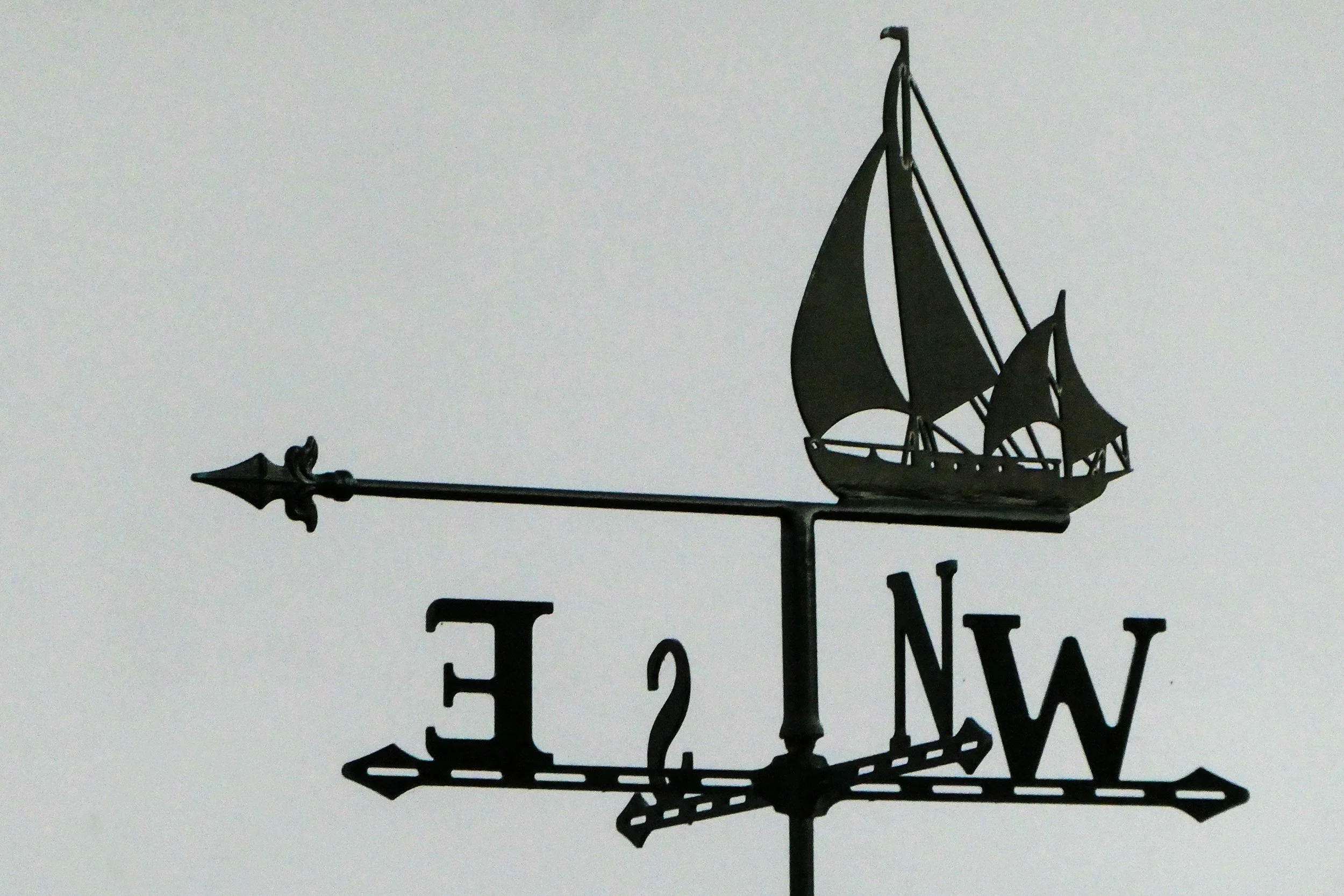
Drawing your true North is a practical outcome of adopting an artist-adventurer’s mindset
Perception is problematic. We all bring baggage to the table and see the world with different lenses. We might already think we can see the thing in its entirety but we are potentially not yet open to seeing at all. Adopting an artist-adventurer mindset means that we can use critical (visual) literacy to start to unpack lenses on looking and we can end up with an understanding of the ‘true north’ of a desired end state that is much closer to its raw or true form. Like Plato’s cave, there might be an essential truth that can be uncovered through ‘not looking’ and turning away for a moment in order to see the ‘thingness’ of the thing.
It all sounds a bit fluffy, but hear me out.
When working with a leadership team recently I noticed some uncomfortable truths. To discuss this I will use a sailing analogy:
The team had a road map for change but the pathway to get to the desired end point was not clear. The destination itself was still a bit foggy. The people on board the vessel did not seem to know how to steer and they were unfamiliar with what kinds of additional deckhands might be needed on board. Some of the crew were steering in a different direction and some people had let their ropes go entirely. Several sails of the ship were flapping helplessly in the relentless wind and the captain was too distracted by the flapping to notice some large and formidable icebergs they were steering straight towards.
How could an artist-adventurer mindset help to fix this? And why is it important to adopt an artist-adventurer’s mindset?
A leader’s decisions are shaped by their perceptions of their crew and their direction. Often the best decisions will be ‘safe’ decisions. Employ a person who has done the job before. Run a schedule that has been proven in another environment. Use a resource that has been used before. Adopt an initiative that has been adopted by another leader. These things are a safety net that can, unfortunately, become a tangle the anchor needs to be freed from.
An artist does not necessarily use tools as they were designed to be used. A pencil can be flipped upside down and used as a scraffito tool to scratch back paint. A paint brush can slide across a canvas or be thrown at the canvas. A camera’s focus can be deliberately blurred. The toolbox can be tipped out, disrupted and rediscovered if the vision for what will be created is clear.
Einstein famously described glimpsing his theory of relativity in a single afternoon, and then spent a lifetime working out the formula. Often the true vision for where we need to head (notice the distinction from ‘where we are headed’) is visual and liberated from words alone. This is why an artist’s ‘visionary’ approach is a way to open up potential.
What about the adventurer aspect?
In adventure-mode you are checking your sails, tacking to make the most of the wind direction, dropping sails in high winds and adjusting your course for the weather. It is ‘nowness’ while moving in the direction of your (hopefully much less foggy) vision for change. An adventurer is living for the adventure and not pining for home (or the state before the change). An adventurer is noticing the scenery and enjoying the company of their crew. An adventurer is a visionary change-maker who is confident to make iterative changes in the moment to continue to make progress towards the vision.
I personally love the principles of Kaizen and lean manufacturing (as I am writing, I have a lean canvas plan for 2026 at my elbow, but I’ll write more on this another time). Kaizen is the Japanese art of making things better with constant iterations. The 4 Ps of Kaizen—Purpose, Process, People, and Problem-Solving—are fundamental to driving continuous improvement and operational excellence. Wave by wave - inching closer to the ideal change state.
An artist-adventurer mindset is a participatory experience that is made tangible and accessible when it is ‘right there’ as a bigger picture.
Too many businesses are sailing through rocky waters. They are sailing blindly and discovering rocks and hurdles as they hit them with captains who are quietly panicking because they should have seen the obstacles coming. Safe navigation would be to map out the hurdles and tack accordingly. Creative navigation would be to find a new direction or even mode of transport entirely.
Are you captaining your team as a sailor or as an artist-adventurer?
Uncertainty and ambiguity could be seen as threats and obstacles - or they could be repackaged as creative raw materials to work with to embellish the vision.
I mentioned negative space earlier when thinking about the ‘form’ of a vision for change. A useful activity to do is a reverse brainstorm to explore what is not desired as well as what is desired and to explore ‘negative space’ of what is not currently in your team’s skillset.
What assumptions have been made about your ship’s direction?
Could everyone on board draw your future? Why/Why not?
A useful way of exploring complexity is with sketching, mapping, and modelling activities that specifically target the question of ‘What do you understand when we say ‘strategic plan’, ‘innovation’, ‘user experience’ or ‘student success’. True visionary leadership needs to transcend words alone.
The sailing boat analogy I have used in this blog post is effectively a written image (metaphor) that is brought to life through several key icons. The anchor can get tangled in unnecessary complexity. The crew need clear roles. The sails need to be set. The hurdles and obstacles need to be predicted. There needs to be someone watching the skies and the seas ahead. The destination needs to be clear. But let’s not forget the waves and the way they symbolise the iterative process of inching towards a goal. Each wave of improvement is part of painting the bigger picture.
Mastery of anything, albeit sailing, running, playing guitar, or delivering workshops (my specialty by the way), comes from being responsive and adaptive and knowing what shapes need to be formed out of the clay in front of you.
2025 was a tough year for a lot of businesses and educational institutions. There has been so much uncertainty about where we are headed economically, and strategic planning questions like ‘How will we get there?’ or ‘How can we leverage 2026?’ are likely recurring earworms.
My challenge to you is to stop steering and start seeing.
Courage, curiosity, and wonder need to be front and centre. Artistry and adventure need to be invited in.
Pablo Picasso transformed painting by painting multiple angles of the same object in one frame (cubism). Mark Rothko transformed the role of the viewer by offering immersive experiences ‘just with colour’. Jackson Pollock pushed us to begin to see painting as a time-frozen piece of process not a product. Richard Serra made us walk in new directions to face uncomfortable truths. Helen Frankenthaler made us reimagine the liquidity of paint. Louise Bourgeois incited psychological confrontation with memory through playing with scale and location.
As Matisse said, ‘Creativity takes courage’.
What would change if you led like an artist-adventurer who was brave and curious with eyes wide open to the unknown?
Learning to see complexity is the first step to giving it actual shape. Employing visual literacy skills means that every crew member’s lens has the power to enrich the shared vision. Just like we might ‘unpack’ art works with Art History lenses on context, media, theory and stylistic analysis, so too might we ‘pack’ our own visions for change.
Seeing Complexity: Visual Leadership Workshop
Most teams are “talking about complexity” instead of seeing it together and iterating on it visually and experimentally.
In 2026 you can book me in for a safe workshop environment to practice the artist-adventurer mindset with real drawing exercises to give shape to your future.
This workshop will help your leadership teams see their current voyage and destination with visual clarity. It will also help you to experience “adventure mode” through small, Kaizen-style iterations on real challenges.
Your roadmap can be re-envisioned as a living map we can mark up, redraw, and re-route together.
Rapid visual mapping
Micro-Kaizen cycles
Pens, sticky notes, messy sketches, and honest conversations.
Deliberate misuse of tools just like an artist to open up different ways of doing things.
Clearer shared “true north” and language for the voyage.
A more aligned crew
Practical steps for ongoing Kaizen: small, frequent course corrections instead of annual strategic lurches.
“If your ship feels noisy, foggy, or off-course, this is your invitation to gather your crew for an artist-adventurer workshop with Katrina. Bring your current roadmap, your questions, and your discomfort. The rest we will draw, test, and refine together.”
Get in touch if you’d like to explore what this could look like for your team.
“There are always flowers for those who want to see them” - Henri Matisse
Katrina Ward is a teacher, educational consultant and workshop facilitator specialising in visual thinking and innovative uses of digital technologies. She has a Bachelor of Arts, a Bachelor of Fine Arts, a Postgraduate Diploma in Education and a Masters with First Class Honours in Art History. She is currently researching semiotics, visual thinking, and the artistry of leadership.